You may have gone over to a friend's house or spent some time in their lanai and noticed a small AC unit high up on their wall. Maybe you even have one of these small HVAC systems in your own home. We call these units ductless mini-splits; as their name suggests, a ductless mini-split is a small version of a typical split system, and they don't have ducts. These units can heat or cool your home and run quietly, but they operate differently from your typical split HVAC systems.
INSIDE A TRADITIONAL HEAT PUMP SYSTEM
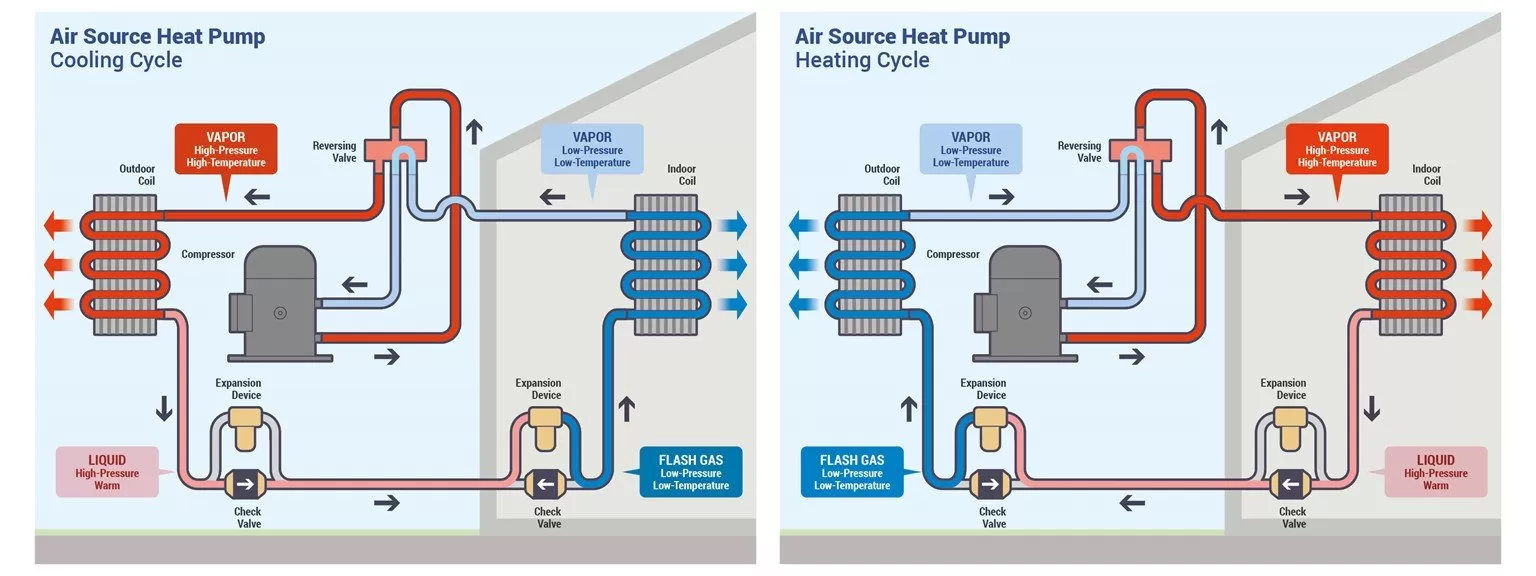
A traditional air-source heat pump isn't a pump at all; it's actually quite like a straight-cool AC unit. However, a heat pump can reverse the refrigeration cycle to heat the home as well. Heat pumps provide heating by bringing outdoor heat inside the home.
In the cooling cycle, a heat pump uses liquid refrigerant (often called by the brand name “Freon”) to absorb heat from inside the home at the evaporator. That refrigerant vaporizes and goes to the compressor via the suction line. The compressor then raises the temperature and pressure of the refrigerant by squeezing it into a smaller space. Then, the refrigerant leaves the compressor via the discharge line and goes to the condenser. There, it rejects heat to the outdoors with help from a fan; the refrigerant loses enough heat to become a high-pressure liquid. That liquid travels through the liquid line to a metering device, which drops the pressure. Metering devices tend to be TXVs or fixed-orifice pistons. From there, the cycle repeats itself.
In the heating cycle, a part called the reversing valve shifts the lines that go into and out of the compressor. When that happens, the indoor unit (cooling mode evaporator) becomes the condenser, and the outdoor unit becomes the evaporator. The system absorbs heat outdoors and brings it indoors, where the blower pushes warm air through the ducts.
INSIDE A DUCTLESS MINI-SPLIT
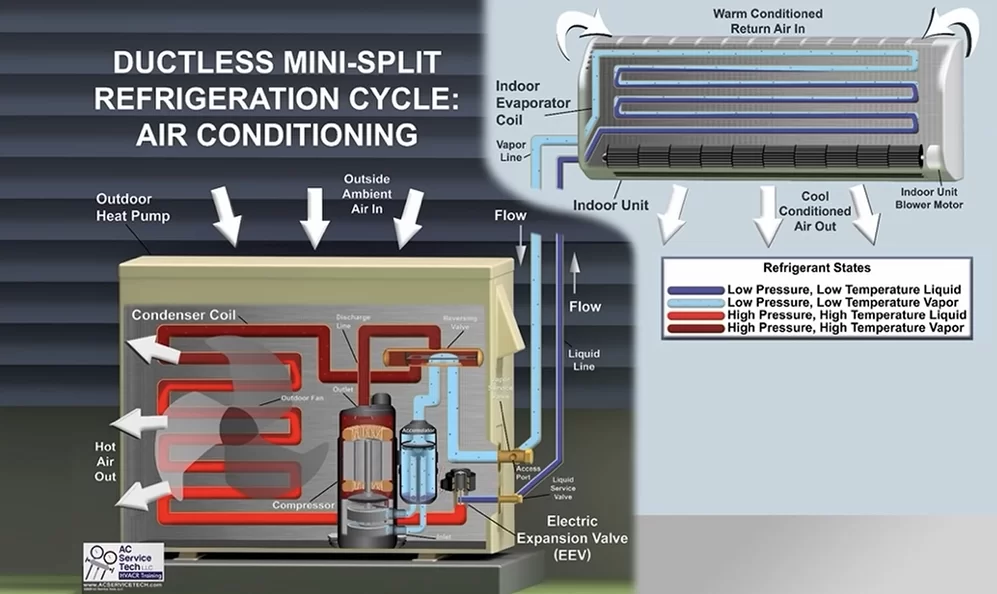
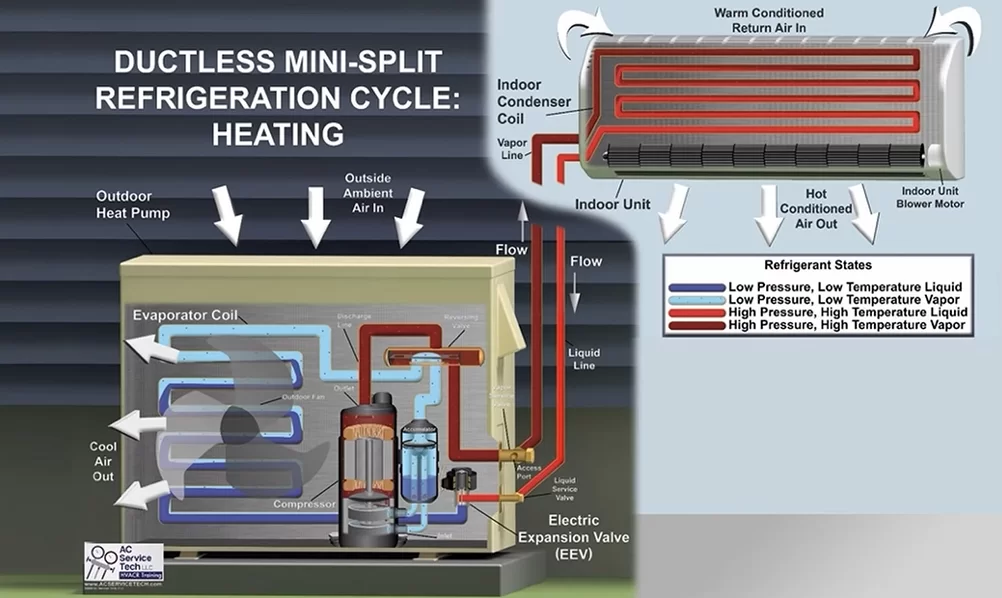
Illustration credit: Craig Migliaccio (AC Service Tech; https://www.acservicetech.com/)
As its name suggests, instead of having ducts to multiple regions of the home, a ductless mini-split focuses on cooling or heating the room where it has been installed. We often come across mini-splits in sunrooms or lanais, as a result.
The refrigeration cycle is mostly the same, but there are some small differences. For example, they often have a different type of metering device: an electric expansion valve or EEV. EEVs rely on information from control boards to modulate themselves. Fixed orifices (pistons) can't modulate at all, and TXVs are mechanical devices that respond to pressures inside the system. Like a TXV, the EEV can change the size of its opening.
In many traditional heat pumps, the metering device feeds directly into the evaporator. However, many ductless mini-splits have another line leading from the metering device to the evaporator; we call that the expansion line or flash gas line. That line takes the metered refrigerant (low-temperature, low-pressure liquid) and sends it to the evaporator coil. After the metering device, some of the liquid refrigerant will boil off due to the sudden pressure drop; that is called “flash gas,” and that's normal in the expansion line and beginning of the evaporator.
DUCTLESS MINI-SPLIT UNIT CONFIGURATIONS
Nowadays, we can install ductless mini-splits in multiple configurations. It's also worth noting that mini-splits can come in ducted varieties, but we will just discuss ductless ones.
Mini-splits may come in the form of high-wall units, which are mounted high up on the wall. There are also ceiling cassettes, which recess into the ceiling. (You can watch two Kalos installers set up a ductless Mitsubishi cassette system HERE.) There are even commercial ductless systems called variable refrigerant flow (VRF) systems.
In many cases, a one-to-one system with a single outdoor and indoor unit works just fine for a single room. That's especially true of people who like to have heating and AC in their lanais. However, there are also multi-zone configurations that place multiple ductless “heads” (indoor units) throughout the building. These ductless heads would all trace back to a single condensing unit outdoors. Bryan Orr, the president of Kalos, installed a multi-zone ductless mini-split system in his own home. You can watch what goes into the installation of an additional head below:
SPECIAL CONSIDERATIONS
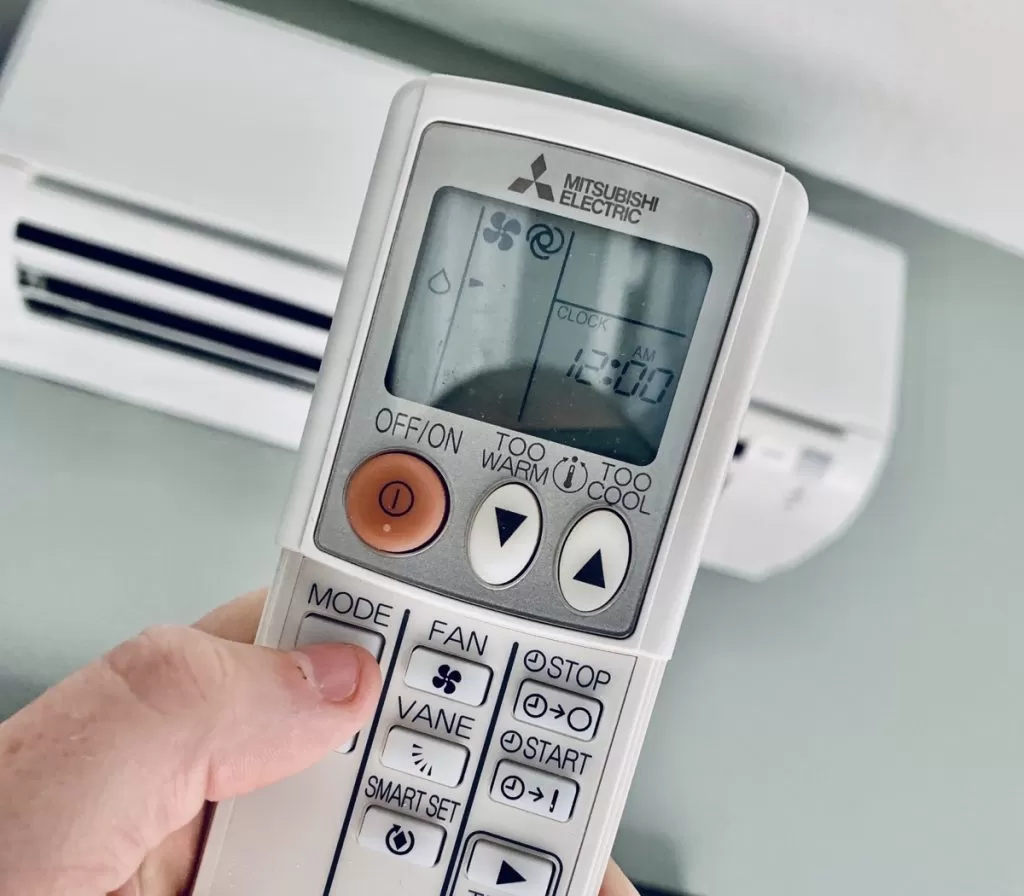
Ductless mini-split systems are unique and will suit some people's needs better than others.
One of the best aspects of the ductless mini-split is its efficiency. These units are all-electric and can have efficiency ratings of up to 30+ SEER; if you want to learn more about SEER ratings, you can read this article: https://www.kalosflorida.com/air-conditioning/what-is-seer-and-why-does-it-matter/. These units also don't take up much space in your home, so their design makes them appeal to people who want small units and care about energy efficiency.
The ductless mini-splits we install are also quiet. If you want to install a ductless mini-split in a place like a bedroom or home gym, you won't have to worry about being bothered by a loud AC unit.
More so than typical AC units, ductless mini-splits work to condition the room they are in. Although they may only require short runtimes, many mini-split units continue running at a low speed. That low speed typically isn't enough to provide continuous dehumidification. As a result, many ductless mini-splits come with a dehumidification mode, which runs the unit at a set speed on a timer to dehumidify the space. However, it's not a great idea to rely on that mode alone for dehumidification; that mode may result in building occupants getting too cold and surfaces in the room reaching the dew point (and sweating). You may need to consider other forms of dehumidification in cases where the ductless mini-split can't keep up with the indoor humidity.
MAINTENANCE
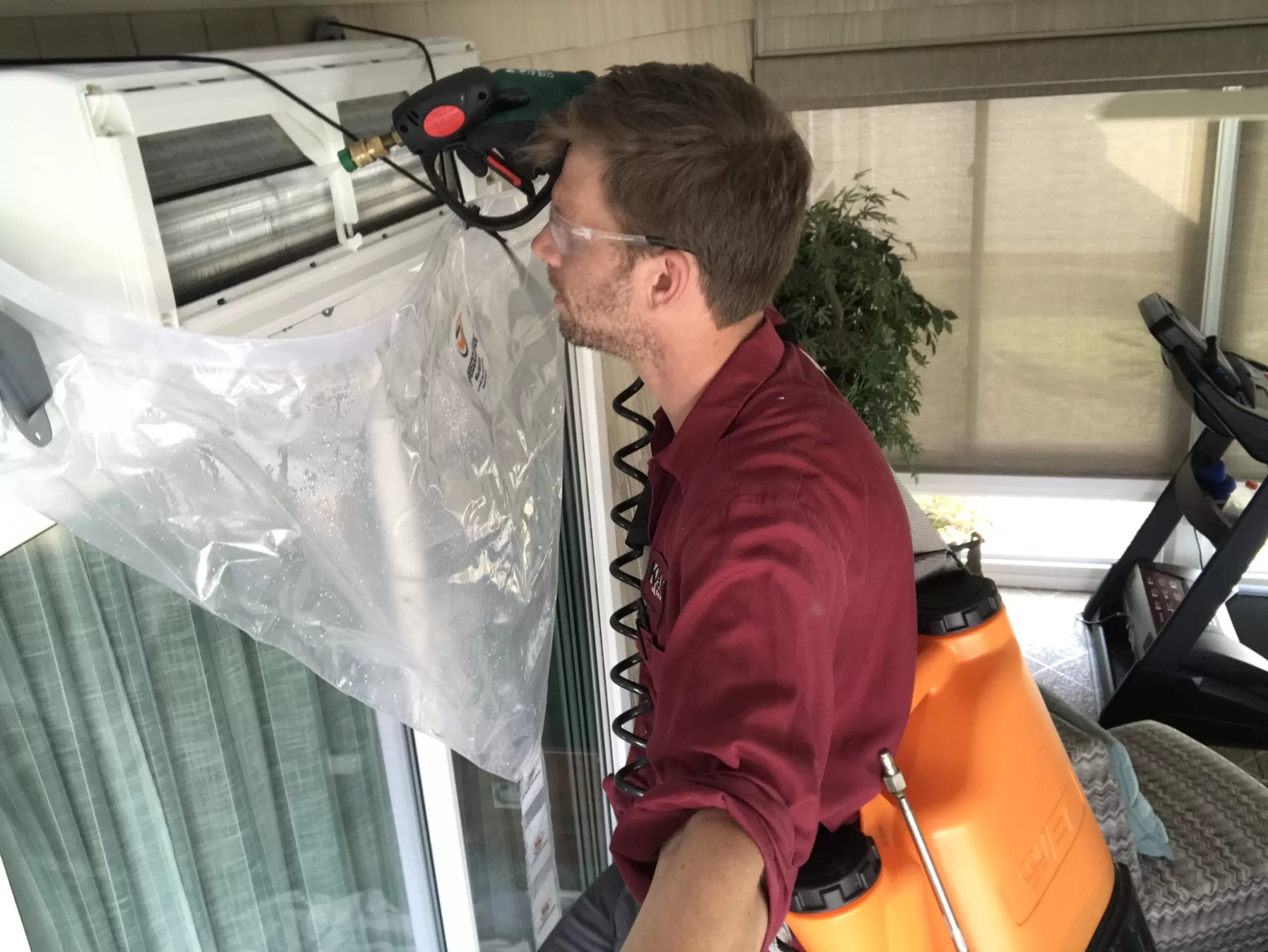
As with any other type of HVAC system, ductless mini-splits require regular maintenance.
Ductless mini-splits are a lot more compact than most other split systems, so they generally contain a lot less refrigerant. So, even tiny leaks may have a noticeable effect over time. When our technicians check the charge of mini-split systems, we encourage them to use temperature clamps instead of gauges. We call that “non-invasive testing,” and we do it to minimize refrigerant losses.
Ductless mini-splits also benefit from regular cleaning. Soil buildup is normal, but it still needs to be addressed and taken care of by HVAC professionals. If a unit needs cleaning, we generally remove the blower wheel, housing, filters, and vanes from the unit and clean those outdoors; we typically clean the indoor coil and drain pan in place using a plastic bib to catch the water and cleaner. (We also place drop cloths down and take extra care to avoid making a mess.) Cleaning the outdoor unit is also vital to help with heat exchange outdoors, which can be done with plain water or non-toxic cleaners.
During maintenance, we will also check the electrical connections and amp draw while the system is running to ensure that the electrical side of the equipment is working well. Here is an example of ductless maintenance in action:
Mini-splits are great options for people who want localized air conditioning, such as in a sunroom, lanai, or room that was recently added on. But they can also provide cooling to multiple rooms when multiple heads connect to a single outdoor unit. They have a small footprint and tend to be highly efficient, making them a popular choice in several of the communities we serve. If your ductless mini-split needs service, or you want to learn more about Kalos's maintenance offerings, please give us a call or text us anytime at (352)-243-7099.