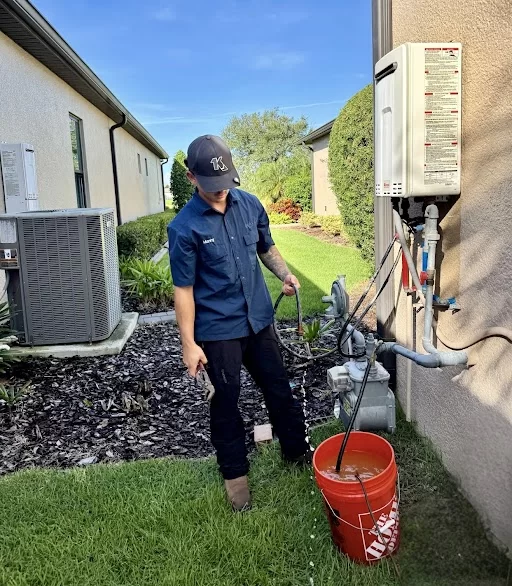
Your tankless water heater may save space and give you steady hot water, but it still needs care. Water moves through a heat exchanger. Minerals can build up, inlet screens can collect debris, and fittings can leak. Gas models also need a clear air and exhaust path.
The right service schedule depends on the maker's instructions, your water quality, and how much hot water your home uses. Hard water and heavy use may mean more frequent service.
KALOS technical FAQ 3.13
What maintenance does a tankless water heater need?
Tankless heaters need periodic descaling, inlet-screen cleaning, leak checks, and inspection of the vent and drain where applicable. The interval depends mainly on water hardness and how much hot water is used.
Why regular care matters
Heating water can leave mineral scale inside the heater. Too much scale can slow water flow and make it harder for the unit to heat well.
Regular care does not mean the heater is failing. It is a chance to clean the unit, find small issues, and help prevent surprise cold showers or water damage.
Four basic maintenance jobs
1. Remove mineral scale when needed
Descaling uses an approved cleaning solution to remove mineral buildup from the water path. The steps are different for each model and valve setup.
A technician should follow the heater manual, use the right products, rinse the system, and make sure it runs well when the job is done. Do not use an unknown chemical or a one-size-fits-all online method.
2. Clean the inlet screen
Many tankless heaters have a small screen that catches debris. A dirty screen can slow water flow.
Cleaning it may require the unit to be shut down, isolated, and drained in a set order. If debris keeps coming back, the water supply or piping may also need attention.
3. Check for leaks
The service visit should include a look at the heater, valves, pipes, and nearby area. On gas models, a trained person should check any sign of a gas leak with the right tools.
Condensing models also have a drain for water made during operation. The tubing, trap, drain path, and neutralizer should be checked when the model uses them.
4. Check the air, vent, and drain paths
Gas models need a clear path for fresh air and exhaust. The vent should be checked for damage, loose joints, or blockage. The drain on a condensing model should flow as designed.
Do not remove vent parts or bypass a safety control. Electric models do not have a gas vent, but electrical concerns still need a qualified person.
How often should service be done?
Start with the schedule in the manual for your exact model. Then look at your water hardness, number of people in the home, hot-water use, and past scale buildup.
Keep a record of each visit. Note the date, water-hardness result if tested, work done, and next service date. This makes the plan fit your home instead of using a guess.
What you can safely watch for
Without opening the heater, look for water, rust, stains, an error code, less hot water, lower flow, or odd sounds. If it is safe, take a photo of the display and piping.
These signs are helpful clues, but they do not prove the cause. Do not open gas piping, touch electrical parts, remove covers, or pump chemicals through the unit unless the manual clearly allows a homeowner to do so.
Call sooner if something changes
Schedule service if hot water changes, an error code returns, water appears near the heater, the vent is damaged, or the drain backs up.
If you smell gas, hear a leak, or a carbon-monoxide alarm sounds, leave the area. Avoid switches and flames. Call the gas utility or emergency services from a safe place.
A trained plumber can identify your model, check the water, and perform the right service for your home.
Keep your hot water dependable
For tankless water-heater care in Central Florida, call or text KALOS at (352) 243-7099. Share the model number, any error code, the last service date, and what changed. We will help you plan the right next step.
Have a tank-style unit? Read why regular water-heater care matters.