You reset the breaker, the power comes back, and then it shuts off again. That is frustrating, but the breaker is trying to protect your home.
A circuit breaker is a safety device. It cuts power when a circuit carries too much current or when it finds certain unsafe conditions. This helps keep wires from getting too hot.
If the same breaker trips again, do not keep resetting it. Leave that circuit off and have a licensed electrician find the cause.
KALOS FAQ 4.06
Why does a circuit breaker keep tripping?
The circuit may be overloaded, an appliance or wire may be damaged, or a connection or breaker may be failing. The trip protects the wiring, so repeated resets aren't a repair.
Why a breaker may trip
1. Too many things are using the circuit
An overload happens when the items on one circuit need more power than the circuit can safely carry. Space heaters, hair dryers, kitchen tools, power tools, A/C parts, and pool equipment can use a lot of power.
Write down what was running when the breaker tripped. Do not use an extension cord or power strip as a quick fix. Moving a plug may not move it to another circuit, and extension cords are only for short-term use.
2. An appliance or motor has a problem
A damaged cord, appliance, pump, fan, or motor may draw too much power. The breaker may trip when the item starts, after it runs for a while, or during wet weather.
Do not keep turning a suspect item on. You may unplug a portable item only if it is dry, cool, not damaged on the outside, and easy to reach. Leave hardwired equipment off for an electrician.
3. A wire or connection is damaged
Loose, hot, pinched, old, or damaged wires can be dangerous. The problem may be inside a wall, outlet, switch, or piece of equipment, so the breaker handle may look normal.
Watch for a burning smell, buzzing, crackling, heat, dark marks, sparks, or lights that dim. Stop using the circuit and call for help. If you see smoke or fire, leave the area and call emergency services.
4. The breaker itself has a problem
A breaker can wear out or be the wrong type for the circuit. The circuit may also need a different setup for the equipment it serves.
An electrician must test the circuit before replacing the breaker. Swapping a part without finding the cause can leave the danger in place.
What to note before you call
You can help without opening a panel. Write down:
- Which rooms, lights, outlets, or equipment lost power
- What was running just before the trip
- Whether it tripped at once or after a few minutes
- How often it has happened
- Any recent storm, water leak, repair, new appliance, smell, heat, dimming, or odd sound
A photo of the outside label or an appliance nameplate may help if you can take it without touching the equipment.
When to call an electrician
Call when the same breaker trips again, when hardwired equipment is involved, or when you cannot point to a one-time overload.
Ask for urgent help if you notice heat, a burning smell, sparks, dark marks, water near electrical parts, or a breaker that will not stay on.
Keep this safety line in place
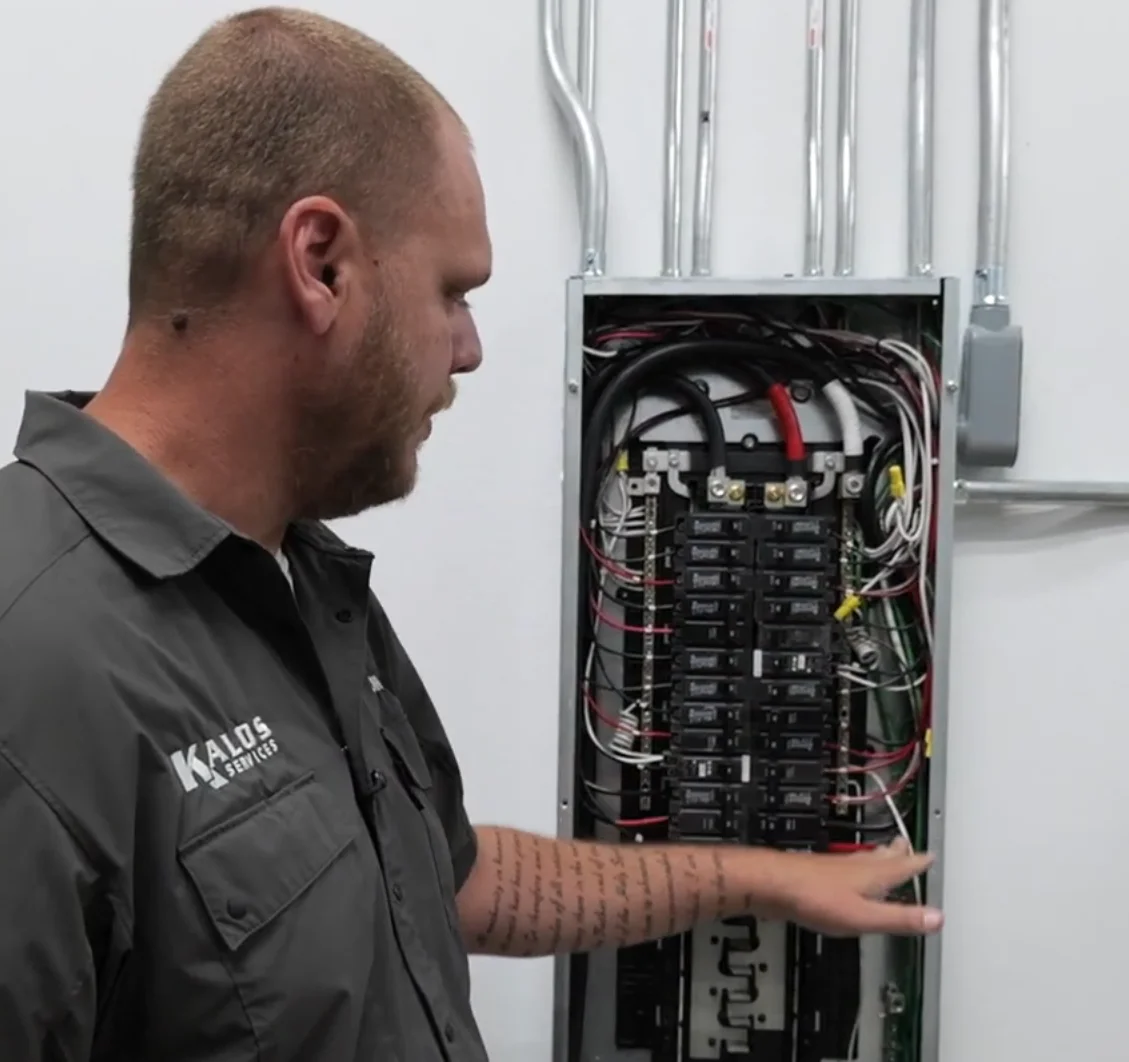
Do not remove the panel cover, touch wires, replace the breaker, install a larger breaker, tape it in place, or keep resetting it. Never touch wet electrical equipment.
Find the cause, not just a quick reset
A KALOS electrician can check the circuit load, appliances, wires, connections, and safety devices. We will explain the problem and your options in plain language.
If a breaker in your Central Florida home keeps tripping, leave the circuit off. Call or text KALOS Services at (352) 243-7099, and we will help you choose the safest next step.